Gdovi kihistu
ingl. k. Gdov Formation
| Tüüp ja tase | regionaalne litostratigraafia (kihistu) |
|---|---|
| Staatus | kinnitatud standard |
| ESK kinnitatud | Jah |
| Autor | Asatkin, B. P. (1937) |
| Indeks | Egd |
| Indeks | V2gd |
| Sünonüümid | Gdovas (läti) Gdovo (leedu) Гдовская свита (vene) |
| Nime päritolu | Gdov, linn Venemaal Pihkva oblastis |
| Kuulub | Balti litostratigraafia (Ediacara) |
| Sisaldab | Oru kihistik Moldova kihistik Uusküla kihistik |
| Suhteline vanus | Kotlini lade |
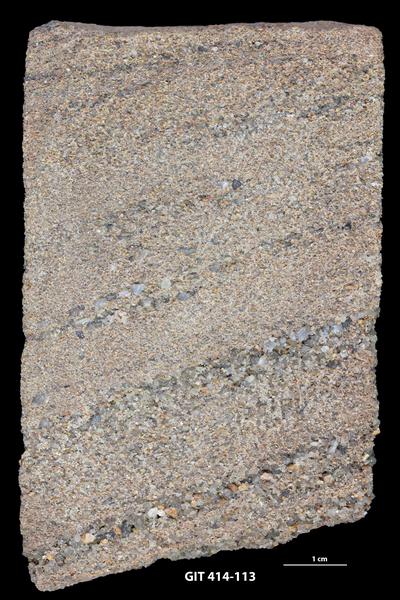
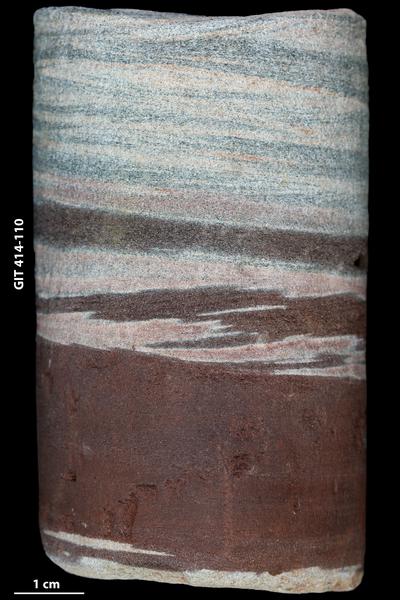
| Litoloogia | Valdavalt jämepurdsed terrigeensed kivimid: punased ja kirjuvärvilised liivakivid ja gravelliidid, mudakivi vahekihtidega |
| eMaapõu ID | 554 |
Tüüpilised kivimid
Stratotüübid
hüpostratotüüp: Venevere 500 puurauk, Lääne-Virumaa (287.00..322.80 m) | Mens, 1992 (comp) |
Kirjeldus
From Mens, K., & Pirrus, E. (1997). Vendian. In Geology and mineral resources of Estonia (pp. 35–38). Estonian Academy Publishers:
The Gdov Formation. Asatkin (1937) derived the name from the Gdov beds used as a division to denote the sandy strata between the “Laminarites” Clay and the crystalline basement in the northwestern part of the East-European Platform. The Gdov Formation is considered as the lower part of the Kotlin Stage accumulated during the initial phase of the Late Valdaian transgression over the northwesternmost part of the East-European Platform, including the present-day Estonia, Latvia, and the western part of the Leningrad Region.
In Estonia, the Gdov Formation rests immediately upon the crystalline basement and spreads in subsurface lying in the northern, eastern and central parts of the Republic. Its thickness ranges from 0.2 to 58.3 m. The Venevere drill core in the interval of 287–322.8 m has been selected as a hypostratotype for Estonia. The formation consists mostly of multicoloured sandstones of various grain size. The uppermost and, locally, also the lowermost part comprises a considerable quantity of reddish and purplish argillaceous rocks. The sandstones are represented by arkose and feldspatic varieties comprising besides quartz up to 50% of feldspars. Micas, both muscovite and green altered biotite, are occasionally found. The mineral composition of the clay fraction is rather stable throughout the formation, being characterised by illite-kaolinite suite (Pirrus 1970). On the basis of lithological features, the Gdov Formation is subdivided into three members, which, in ascending order, are: Oru, Moldova and Uusküla.
Viited
Meidla, T. 2017. Ediacaran and Cambrian stratigraphy in Estonia: an updated review. Estonian Journal of Earth Sciences 66(3), p. 152–160. https://doi.org/10.3176/earth.2017.12 PDF | Sisu: Uuendatud Eesti Ediacara stratigraafiline skeem |
Mens, K., Pirrus, E. 1997. Vendian. Geology and mineral resources of Estonia. Estonian Academy Publishers, Tallinn. p. 35-38. | Sisu: Ülevaade |
Mens, K. (comp.) 1992. Каталог стратотипов венда и кембрия Прибалтики [Catalogue of Vendian and Cambrian stratotypes of the East Baltic areas]. p. 1-25. PDF
Mens, K., Pirrus, E. 1980. К стратиграфической номенклатуре вендских отложений Эстонии [On stratigraphical nomenclature of Vendian beds of Estonia]. Eesti NSV Teaduste Akadeemia Toimetised. Geoloogia / Известия Академии наук Эстонской ССР. Геология 29(2), p. 49-54. https://doi.org/10.3176/geol.1980.2.01 PDF
Grigelis, A. A. (ed) 1978. Решения межведомственного регионального стратиграфического совещания по разработке унифицированных стратиграфических схем Прибалтики 1976 г. [Решения межведомственного регионального стратиграфического совещания по разработке унифицированных стратиграфических схем Прибалтики 1976 г.]. Litovski NIGRII, Leningrad. p. 1-85. PDF
Asatkin, B. P. 1937. Докембрийские образования, кембрийские и нижнесилурийские отложения Ленинградской области [Precambrian formations, Cambrian and Lower Silurian sediments of the Leningrad Region]. Тр. Ленингр геол треста, вып 15. p. 5-8.
Siin lehel leiduvad materjalid on kõigile vabaks kasutamiseks vastavalt Creative Commons CC-BY litsentsile